Serving Nashville and the Middle Tennessee Area

Tennessee Humidity & Your AC: Why Your Nashville Home Feels “Sticky” Even When It’s Cool
Nashville is a city known for its vibrant music scene and beautiful rolling hills, but it is also famous for a specific kind of summer weather. If you have spent any time in Middle Tennessee during July or August, you know that the heat rarely comes alone. It is almost always accompanied by a thick, heavy humidity that seems to cling to everything.
Many Nashville homeowners find themselves in a frustrating situation during these months. They set their thermostats to a comfortable 72 degrees, and the air blowing out of the vents feels cold, yet the house still feels uncomfortable. You might feel a lingering dampness on your skin, or your bed sheets might feel slightly moist. This is the classic sticky home phenomenon.
At Maynard Plumbing, Heating & Cooling, we hear about this issue constantly. The truth is that your air conditioner has two jobs: it must lower the air temperature and it must remove excess moisture. If your system is only doing the first job, you are only half comfortable. Understanding the relationship between Tennessee humidity and your HVAC system is the key to reclaiming your indoor sanctuary.
The Science of the Nashville Heat Index
To understand why your home feels sticky, we have to look at the unique geography of Middle Tennessee. Nashville sits in a basin, often referred to as the Central Basin. This geography, combined with our proximity to the Cumberland River, means that moisture often settles over the city and stays there.
Sensible Heat vs Latent Heat
Your HVAC system deals with two types of heat. Sensible heat is the temperature you see on your thermostat. Latent heat is the energy stored in the water vapor in the air.
-
The Cooling Process: To cool your home, your AC must remove both types of heat.
-
The Moisture Limit: Air can only hold a certain amount of water. When the humidity is high, the air is saturated.
-
The Comfort Gap: If your AC removes the sensible heat but leaves the latent heat, your home will be cool but the air will still be heavy with water.
Why the Dew Point Matters
In Nashville, the dew point is often a better indicator of comfort than the relative humidity percentage. When the dew point climbs above 65 degrees, most people begin to feel sticky. If the dew point in your living room is too high, your skin cannot effectively evaporate moisture, which is why you feel hot even when the air around you is technically cool.
Why Your AC Might Be Failing the Humidity Test
If your home feels like a swamp despite a low thermostat setting, there is likely a mechanical or design issue at play. Air conditioners are not just coolers; they are large-scale dehumidifiers. However, they need to run under specific conditions to remove water effectively.
The Problem with Oversized Units
It is a common misconception that a larger AC unit is always better. In fact, an oversized system is one of the primary causes of high indoor humidity in Tennessee.
-
The Quick Fix: An oversized unit can lower the temperature of a room very quickly.
-
The Moisture Trap: Because it cools the room so fast, it reaches the thermostat goal and shuts off before it has a chance to pull moisture out of the air.
-
The Result: You end up with a cold, damp home because the system never ran long enough to let the condensation process work.
Short Cycling Explained
Short cycling occurs when your AC turns on and off frequently. It takes roughly ten to fifteen minutes of continuous operation for an AC coil to become cold enough to start effectively removing humidity. If your system only runs in five-minute bursts, the moisture stays in your air, and the water that did condense on the coils often blows back into your house before it can drain away.
Aging Equipment
As an HVAC system ages, its efficiency at heat exchange and moisture removal drops. Older units often have dirty coils or failing components that prevent them from reaching the necessary temperatures to wring water out of the Nashville air. If your system is over twelve years old, the sticky feeling might be a sign that it is time for an upgrade.
Indicators of High Indoor Humidity
Sometimes the signs of high humidity are subtle, while other times they are impossible to ignore. Recognizing these indicators can help you address the problem before it leads to property damage or health issues.
Physical Sensations
The most immediate sign is how you feel. If you notice any of the following, your indoor humidity is likely above the ideal 45 to 50 percent range:
-
Your skin feels clammy or tacky shortly after showering.
-
The air feels heavy or difficult to breathe.
-
You feel the need to lower the thermostat even further just to feel comfortable.
Visible Home Clues
Your Nashville home will also start to show signs of distress if the air is too moist.
-
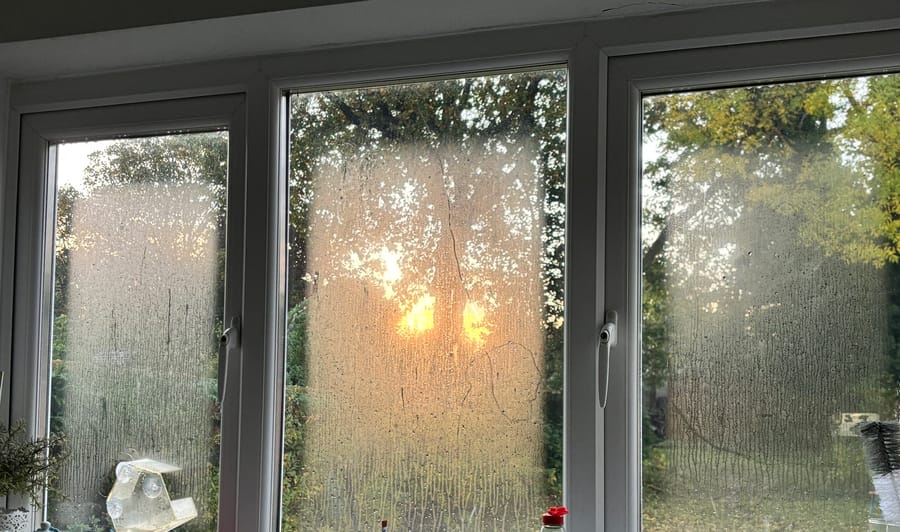
Foggy Windows: Condensation on the inside of your window panes is a major red flag.
-
Musty Odors: That basement smell in your living room usually indicates mold or mildew growth triggered by damp air.
-
Warped Wood: If your hardwood floors are cupping or your wooden doors are sticking in their frames, the wood is absorbing excess moisture from the air.
Health Impacts
High humidity is more than a comfort issue. In the humid climate of the South, excessive moisture promotes the growth of dust mites and mold spores. For Nashville residents with asthma or allergies, a sticky home can lead to increased respiratory distress and poor sleep quality.
Solutions for a Crisper, Drier Home
The good news is that you do not have to live in a humid house. Modern HVAC technology offers several ways to balance the atmosphere in your Nashville home.
Whole-Home Dehumidifiers
For many Tennessee homeowners, a whole-home dehumidifier is the best investment they can make. This device is installed directly into your existing ductwork. It works alongside your AC to pull gallons of water out of the air every day. The best part is that it can run even when your AC is not cooling, ensuring your home stays dry during those rainy but mild spring and fall days.
Variable Speed Technology
If you are looking to replace your current system, a variable speed AC is a game-changer for the Nashville climate. Unlike standard systems that are either on or off, variable speed compressors can run at very low speeds for long periods. This constant, gentle airflow provides superior dehumidification and eliminates the sticky cycles associated with traditional units.
Smart Thermostats with Humidity Sensing
Many modern thermostats, like those from Nest or Ecobee, can monitor humidity levels. Some can even be programmed to tell your AC to keep running at a lower fan speed until a specific humidity goal is met, regardless of the temperature.
The Role of Maintenance and Ductwork
Sometimes the solution to a sticky home is as simple as a professional tune-up. At Maynard Plumbing, Heating & Cooling, we often find that minor issues are the root cause of major humidity problems.
-
Dirty Evaporator Coils: If your coils are covered in dust, they cannot absorb heat or moisture effectively.
-
Leaky Ducts: If your return ducts have holes, they might be pulling in hot, humid air from your crawlspace or attic and pumping it directly into your living areas.
-
Clogged Drain Lines: If your condensate drain is backed up, the water that should be leaving your house stays trapped in the system, increasing indoor humidity.
Our maintenance plans are designed to catch these issues before the peak of summer hits. We ensure your system is optimized for the specific challenges of Middle Tennessee weather.
Reclaiming Your Comfort
Living in Nashville means accepting the humidity outdoors, but you should never have to accept it inside your home. If your house feels sticky even when the air is cool, it is a clear sign that your HVAC system is struggling to keep up with the Tennessee climate. By focusing on moisture removal through proper sizing, modern technology, and regular maintenance, you can enjoy a home that feels as crisp and refreshing as a fall morning.
Do not settle for a clammy, uncomfortable living space.
Contact Maynard Plumbing, Heating & Cooling today to schedule an indoor air quality and humidity audit for your Nashville home.
Recent News
Preventing HVAC Failure: Preparing Your Heating System for Tennessee’s Winter “Deep Freezes”
How to Protect Your Pipes from Freezing During Cold Weather in Nashville
5 Signs Your Water Heater Needs Repair Before Winter Arrives in Nashville
How Regular Drain Cleaning Can Prevent Costly Plumbing Emergencies
High-ROI Home Improvements in Nashville
Energy Efficiency & Indoor Air Quality Blueprint for Tennessee Homes
Home Heating and Cooling Options: Ductless, Mini Split, and Heat Pump Explained
Schedule Service